In today’s ever-evolving educational landscape, embracing cutting-edge technology is essential for preparing students for the future. The integration of mobile apps and virtual reality (VR) into e-learning platforms represents a significant shift towards more dynamic and interactive learning environments. This transformation is not just about incorporating new tools; it’s about reimagining how education can be delivered in a more engaging and accessible way.
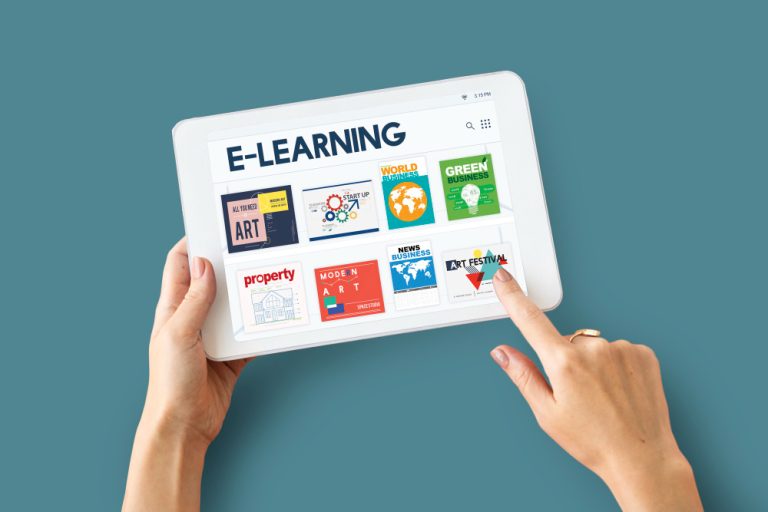
Mobile apps have revolutionized the educational experience, offering a convenient and personalized approach to learning. These apps provide students with resources that are available anytime and anywhere, breaking the constraints of traditional classroom settings. From language learning to STEM subjects, mobile apps cater to a variety of interests and educational needs. With their user-friendly interfaces, these apps are intuitive enough for students of all ages, making them a practical addition to e-learning environments.
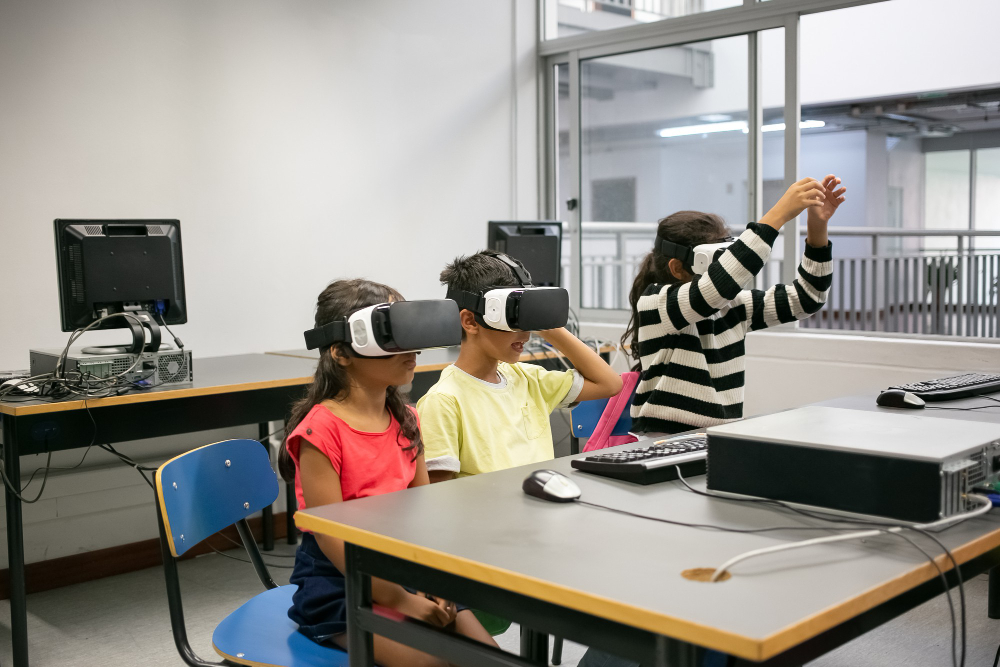
Virtual reality, on the other hand, offers an immersive experience that makes learning more engaging. By simulating real-world scenarios, VR allows students to explore complex concepts in a controlled and safe environment. Imagine biology students dissecting organisms without the need for physical specimens, or history students experiencing historical events as if they were there. This level of immersion fosters a deeper understanding of subject matter, making abstract concepts tangible and relatable.
The integration of these technologies enhances not only engagement but also student-teacher interaction. Through mobile apps, teachers can track student progress in real-time, providing immediate feedback and support where needed. VR platforms can facilitate interactive sessions where teachers and students communicate more seamlessly in a virtual space. This level of interaction helps to tailor educational approaches to individual student needs, a level of customization that was challenging in traditional settings.
While these technologies present exciting opportunities, there are challenges to consider. Ensuring equitable access to mobile devices and VR headsets is a primary concern that needs addressing. Schools and educational institutions must work toward bridging the digital divide, ensuring that all students have the tools they need to benefit from these advancements. Additionally, teacher training is crucial; educators must be equipped with the skills to effectively utilize these new technologies in their teaching practices.
As we look toward the future, the continuous evolution of e-learning platforms is inevitable. Developers and educators need to work collaboratively to create content that is not only educational but also engaging and age-appropriate. By focusing on user experience and feedback, app and VR developers can fine-tune their products to better meet the educational needs of students and teachers alike. This collaboration will lead to more innovative approaches that continually transform and enhance the educational landscape.
Ultimately, the future of education will be shaped by how well we integrate and adapt to these emerging technologies. By embracing mobile apps and VR, we open new possibilities for e-learning that are more inclusive, interactive, and effective. This transformation marks the beginning of a new era, where technology and education converge to create classrooms that are not bound by walls, schedules, or traditional constraints, thereby empowering students to learn with unprecedented freedom and enthusiasm.